Nicomachean Ethics Book 9

Blog Prompt 16: Consider the following pairs and how they would fit into Aristotle’s categories of friendship: Thomas/Victor, Victor/Arlene, Arnold/Suzie, Lucy/Velma. Near the end of the film, Thomas asks Victor,“Do you know why your Dad really left?” Victor replies, “Yeah. He didn’t mean to, Thomas.” What didn’t Arnold mean to do? What does this exchange reveal to us about Victor and Thomas? How would Aristotle categorize their friendship? 

Aristotle’s Judgement

Thomas and Victor are the type that don’t get along until they have to spend one day together to develop a bond. In the movie called “Smoke Signals”, it showed how they would cared for each other as brothers and at the end of the movie Victor gave Thomas his father’s ashes. Aristotle would say that their friendship is virtue not pleasure because when they both lost their father they’ll support each other through their hard times that they learned a lot of getting to know one of another and when Thomas received Victor’s father’s ashes from Victor himself seems to be a virtue thing than a pleasure wise. Aristotle would say that it’ll the most noblest thing to do for a man which he implies, “In all the actions, therefore, that men are praised for, the good man is seen to assign to himself the greater share in what is noble.” Aristotle refers on Victor giving his father ashes to Thomas is a very noble thing to do. Victor and Arlene as a mother and son bond there wasn’t enough dialog between the two, however action speak louder than words. Aristotle would define their friendship as utility because Arlene used to drink and get abused by Arnold who is Victor’s father when Victor was 12 at the time. Victor helped his mother unintentionally to stopped drinking by throwing beers at Arnold’s car because Victor was angry at his father and when Arlene saw that that’s when she decides to stop drinking. The abused became worst when Arnold was told to stop drinking or even try to remove beers and decides to leave Arlene and Victor. The film has a time jump to 10 years and I believe that throughout the years Victor helped his mother recover from the tragedy that happened after Arnold leaves. Arnold and Suzie seem close as good friends which surprises Victor because when Suzie first talked about Victor’s father he seemed to be a completely different person he was before. Aristotle can describe this as a friendship of utility because Suzie mentioned that her and Arnold shared each other’s secrets. I believe that throughout the years Suzie helped Arnold’s problems and changed his thoughts or desires to become better similar how Victor helped his mom out. Lucy and Velma’s friendship had the smallest screen time in the film, so far they seem to joke around and be comfortable with each other, however Aristotle would suggest that Lucy and Velma’s friendship is pleasure because they may have things in common or like each other’s personalities. Aristotle said, “…to those who are attached to one another by the motive of pleasure.” In the scene Velma drinks a coke while driving in reverse and Lucy lectures Velma on how she should watch the road until the car stopped, they both looked at each and laughed.

At the end of the Film

Thomas asked Victor, “Do you know why your Dad really left?” and Victor reply back, “Yeah. He didn’t mean to, Thomas.” In the beginning of the film Arnold was being drunk and playing with fireworks until one landed inside of Thomas’s house which catches on fire. The fire spread rapidly and Thomas’s parents had no choice, so they threw Thomas out of the window where Arnold can catch him and the parents were left there in the fire. Arnold felt distress and guilt so much that he left his own family, along the way he met Suzie and Arnold told her everything about the incident which Suzie helped him from his distress. Suzie always kept Arnold’s secret until he told Victor and at the end of the film Victor forgave his father which why he replied with, “Yeah. He didn’t mean to, Thomas.” This exchange reveals that Thomas and Victor are truly the friendship of virtue because they shared a close bond that they can trust each other without a doubt just like a brother would.

W/C: 727
Nicomachean Ethics, Book 8

Blog Prompt 15: Do you agree with Aristotle’s proposition that there are three types of friendship: friendship of pleasure, friendship of utility, and friendships in virtue? Can you identify people in your life that fall into any of the three categories?

Proposition

I agree with Aristotle’s three types of friendship, however there are more types of friendships than three and Aristotle’s friendships seem to be the most important part in people’s lives. I have known many people who fall in these categories such as classmates I know are friendship of utility because in class we help each other out and give tips on lecture notes that needs to be rephrase. My close friends are considered friendship of virtue and is the best one out of utility and pleasure. People who I come across from my hobbies or activities are friendship of pleasure and is good because you can build a community of it.

Friendship of Pleasure

Friendship of pleasure is when people find each other through their common activities or interests that would spend more time together with shared interests. Not only with that, however many people who hang out with others, also have a reason and can like one of their personalities such as their intelligence, humor, kindness, and calm. Aristotle thinks friendship of pleasure is, ” Friendship for the sake of pleasure bears a resemblance to this kind; for good people too are pleasant to each other.” Pleasure is good to have something in common, but mainly that’s the only activity or interest they have and talk about it nothing else. This can happen anywhere in your favorite spots such as the cafe, library shopping in stores and etc. When you meet a person in those places, the conversation would commonly be about the shared interests of the place and their reasonings for coming there frequently.

Friendship of Utility

Friendship of utility is someone who helps others that are struggling which they would like their thoughtful of kindness and appreciation. Those who do favors for others can help you back as well if your having trouble with something and is a good way to make connections to find good opportunities in the future, but that’s the case because people help others from their kindness no strings attached. Aristotle’s view on utility is,  “Friendship for utility’s sake seems to be that which most easily exists between contraries, e.g. between poor and rich, between ignorant and learned; for what a man actually lacks he aims at, and one gives something else in return.” The bad side of utility is a possibility of people who only cares about you on what you do for them than themselves as a person. For example, like at a workplace, there’s an employee who you cover for if they aren’t able to make it to work, however the employee won’t cover for you when you’re aren’t able to work.

Friendship of Virtue

Friendship of virtue is a good bond of friendship that supports each other through their memorable moments such as marriage, promotion, or a good opportunity given to them and as a friend with virtue who are your main personal support. Aristotle found that people with these qualities are most suitable which is, “…based on a certain resemblance; and to a friendship of good men all the qualities we have named belong in virtue of the nature of the friends themselves;… these are the most lovable qualities.” Aristotle believes that the friendship of virtue comes naturally and is found mostly in their best form in us. This can happen anywhere and at any time, usually people make friends at school and at work which can be a friendship of virtue.

W/C: 615

Aristotle Nicomachean Ethics, Book III

Blog Prompt 14: What is an “incontinent man?” When does a person know what they are doing (that it is right or wrong)? When do we have a choice? Give Aristotle’s position and your own.

Incontinent Man

In Aristotle view of incontinent man is when a man who is someone who’s weak, but has the heart in the right place and are knowledgeable. They’ll know what’s the right thing to do, but won’t take action. It’s like a person who talks about what they’re going to do in a situation, but when in comes to it, in reality they wouldn’t do anything about it from what they said before. The incontinent man is known for a coward because the person will say anything to save themselves and will always put themselves first than others which many don’t have any close relationships. I said this because in my experiences I had seen break ups due to the fact that their partner wouldn’t do anything for their love one such as defending them or not picking any sides. Even when the partner said that they would do it next time.

A choice

Aristotle believes choice is, “…praised for being related to the right object rather than for being rightly related to it, opinion for being truly related to its object. And we choose what we best know to be good, but we opine what we do not quite know.” When a person knows the right or wrong thing is when the realization happens after you had made a choice. Morally, people already know that it’s wrong to do so. It depends on the situation because there are times that people have to do the right thing even when it could hurt someone, but they have the right to know something that’s important to them. There’s always a choice that people make and in every second a choice has been made. For instance, when we decide to get up out of bed or not and deciding whether to sleep early or late at night. The big choices are the hardest ones to make because it’s life changing and once a decision has been made you can’t go back. Every choice is important because it can teach us valuable lessons and what we can learn from of what to avoid in the future. Aristotle has another perceptive on choice which is, “The object of choice being one of the things in our own power which is desired after deliberation, choice will be deliberate desire of things in our own power; for when we have decided as a result of deliberation, we desire in accordance with our deliberation.” Aristotle claims is true because everyone has the power to choose what they desire and follow it unlike the incontinent man who wouldn’t be powerful enough to make a choice they were willingly intended to make.

W/C: 479

Aristotle Nicomachean Ethics, Book I & II

Blog Prompt 13:  Are the virtues merely a means to happiness? What is virtue? How does one become virtuous? What does Aristotle mean when he says that virtue is a state of character? Give examples and explain.

A virtue is a show of kindness and being sympathetic towards others which doesn’t mean happiness, however it goes towards happiness when is receiving and giving happiness. Aristotle believes that it’s a gift from the gods to men because it seems reasonable to him that the gods would blessed humanity with this gift of happiness that’s a process of training and learning that is a god like thing. Almost anyone can become virtuous just by doing one good deed that has to be meaningful and a kind generous thing to do that not many people would do for others such as giving tips in restaurants for waiters, helping people who aren’t able reach an item or objects, giving a compliment to others, and etc.

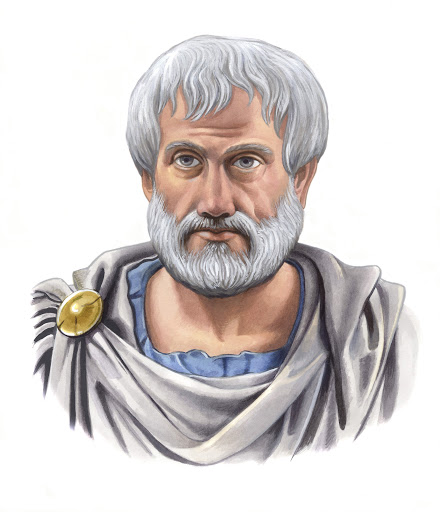
Aristotle
385 B.C. – 323 B.C

Aristotle called virtue a state of character from his statement it means that a person show kindness towards others and it’s a choice that everyone makes, therefore Aristotle considered it as a mean of passion and action between vices. There’s a bit anger into it because Aristotle explains a person with good temper can be virtuous and Aristotle said that, “…sometimes we praise those who get angry and call them manly.” Aristotle labeled them as a moral virtue because it was mainly about habit and practice than reasoning and instruction. For instance, when I ask my brother for favors and if he’s a bad mood, he’ll ignore my request or straight up say no, afterwards when he’s calm he’s able to do the favor. I learned that when a person is angry at you for other reasons or they’re in a bad mood no matter what, they’ll help you even if they had said no because it’s what good kind person would do. This is mainly when a person is asked for a simple favor then was declined because a person was angry, but not at them, so the person who’s angry realized their mistake and helps them. This is why virtue is a state of character because no matter what emotions you feel, you’re morality of doing the right thing will always be greater than your emotions.

W/C: 392

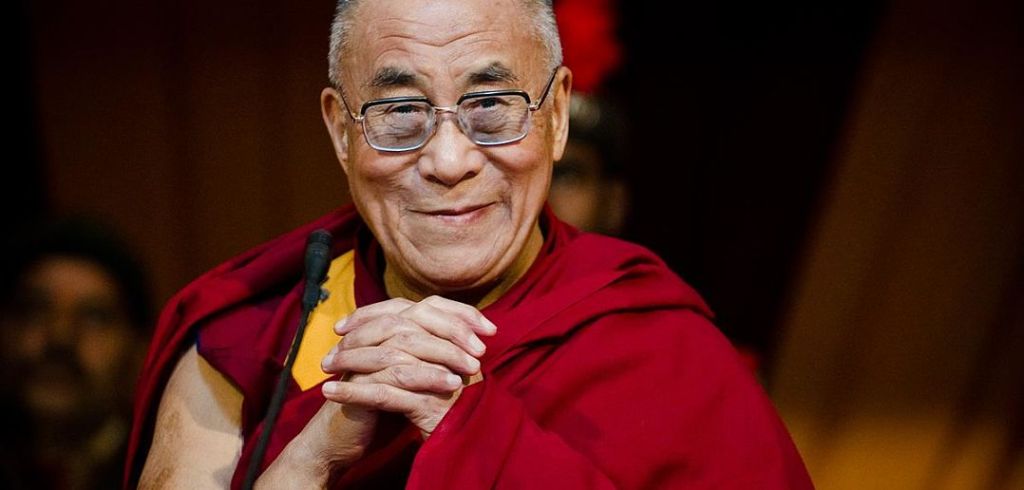
Dalai Lama

Blog Prompt 12: What are the Dalai Lama’s main commitments? What are their benefits? Do you share any of his commitments?

Dalai Lama
July 6, 1935 –

Dalai Lama:

Dalai Lama has three main commitments which are, “The Promotion of Certain Human Values”, “The Promotion of Religious Harmony”, and “Preservation of Buddhist Culture”, each of them are different and has their own values. Dalai Lama was born in Lhamo Dhondub to a farming family in a northeastern Tibetan village in 1935.  Dalai was the head monk of Tibetan Buddhism, therefore makes him govern the Himalayan country. Dalai was awarded for the Nobel Peace Prize for his nonviolent efforts for bringing honors of Tibet.

The Promotion of Certain Human Values:

The first commitment is the promotion of certain human values includes compassion, self-discipline, forgiveness, contentment, and tolerance. Dalai picked these because it relates on how everyone wants happiness and don’t want to feel pain, however having these traits makes you a better person because people would find you more comfortable or interesting being with you, additionally is stated in titled “We need global , secular ethics”, “My wish is that, one day, formal education will pay attention to the education of the heart, teaching love, compassion, justice, forgiveness, mindfulness, tolerance and peace.” I can relate to this because I do have these traits and I have friends who told me themselves that they look up to me or how they valued my forgiveness and compassion.

The Promotion of Religious Harmony

The second commitment is the promotion of religious harmony, in the world we live in have political and economic dissonance. Dalai believed that religions beliefs can prove to be the way forward for peace and prosperity. This the only commitment I don’t share with because I’m not religious and I believe that there are other ways for humanity to find peace and prosperity which is stated in titled “We need global , secular ethics” article from Dalai Lama, “We need a global ethic that can accept both believers and nonbelievers, including atheists.”

Preservation of Buddhist Culture:

The third commitment is the preservation of Buddhist culture, Dalai believed that culture and its heritage has a unique value that can define people’s national identity and it’s important because it keeps people’s integrity as regular people. I can share this commitment because I myself am Hispanic and I celebrate my culture with my family, however my family and I celebrate only some of them not all of them because it’s easier that way since there are similar celebrations that relates the same thing such as mother’s day, fourth of July, and Halloween.

W/C: 432

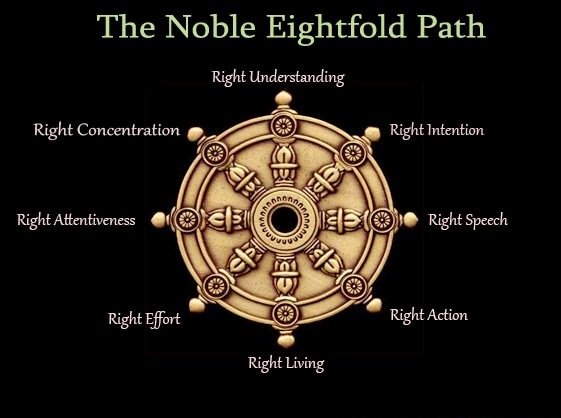
The Noble Eightfold Path

Blog Prompt 11: Focus on a particular component of the eightfold path and apply it to your own life. Do you think that right action would mean less suffering? Refer to both readings in your explanation of the connection between virtue and the cessation of suffering

The Right Attentiveness gives you the mindfulness of gratitude and helps you view the world better. You start to set off goals of what you want to do in your life and what to achieve which can change overtime, however we always hold onto one goal that can become our purpose of the world you view. In all of my life I have been a thinker, thinking what am I going to do with my life? Whether or not I made the right choice? How am I going to deal with this situation? These are the mindset everyone has when they don’t know idea what to do, however when the right decision has been made, you’ll know it because you have decided based on facts or a gut feeling. Going with your gut feeling is always a good thing because it’s like an alert of telling yourself that this is it, this is the one to make for a good call.

Right Action

When the right action has been I believe that, there wouldn’t be less or more suffering because it’ll be in the middle and the consequences can have a possibility to make the suffering more. It’s the after effects that makes it worst and can lead to a bigger problem than the last one. It’s a undeniable cycle that always come with suffering regardless the right decision you made even when it’s the right thing to do and everyone within the decision is affected by it, can be more than others. The suffering is a process of grieving that everyone has been through, for instance when there’s a cut on the skin that needs to be heal just like how mentally hurt we can be and time is the key to heal the wound we feel mentally with a full complete understanding of the situation.

W/C: 353

A Kantian Critique

Blog Prompt 9: Should organ sales be legal? Give the Kantian argument. Do you agree? Where would a utilitarian stand?

The Good and Bad of Businesses:

There are good and bad businesses that sells certain things. One of those bad business is selling organs and that people shouldn’t be buying them. It’s not satisfactory that people should be selling their organs when they’re alive or doing something else of a purpose where they think it’s important. In the movie called, “Dirty Pretty Things” where a man from the front desk discovers a human heart in the toilet and found a person responsible for it, furthermore the man has been getting organs from people who are doing it to move to America for a better life. No one should blame them for doing it because they were manipulated and told that if they would want something that they desire should do this one thing which isn’t worth it and there are better ways to get what they want the most. This movie has an excellent examples of never selling other people’s organs even when they wanted to move to America and the man from the front desk is a trained surgeon who was almost forced to remove people’s organs, additionally his will power was stronger than his sympathetic for others and denied to do anything illegally even if it can help him get out of America or his friend that is need to get out of the country because he know there’s a better way. When I first watched this movie I thought it was weird because the character who was hired to cut and sell people’s organs would try to flush a heart leaving them to get caught, but I think it was the person from the film who was the villain, flushed the heart because it would be unprofessional for a surgeon to treat their patients and discard anything irresponsibly would be consider a violation to the law and the medical code.

Organ Transplantation Issues:

This is an important statement from Russell Scott wrote in his book called “The Body as Property” in 1981, stating “Whether alive or dead, every body stands today as a potential source of therapeutic benefit to the body of every other human.” It’s always better to maintain all your organs in one piece, however if you are willing to help people to donate your organs, so that others may live, it’s good just not for business or getting what you want only to know that you’re saving a life and did paper work to become a official donor.

Image result for "The Body as Property" by russell scott
Russell Scott
Wrote “The Body as Property”

W/C: 440

Kant’s Humanity Formulation

Prompt 8: Summarize and explain the second formulation of the categorical imperative commanding us to treat people (ourselves included) as “ends in themselves” and never merely as means. Consider intrinsic versus instrumental value and how that value plays a role in moral theory.

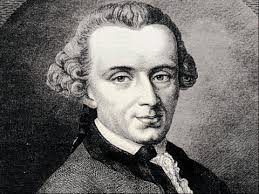
Immanuel Kant
1724 – 1804

Second Formulation:

Some people can be selfish enough to go do something unpredictable just to make themselves feel better by bragging on how they helped a person, so that they can prove a point and show how a good person they are when in reality they’re not. It’s good that they’re helping others, however aren’t doing the right reasons, therefore the categorical imperative shows that it’s meaningless and is what most people do wrong about. For an example, You-tubers have videos of helping the homeless giving them food or giving strangers I-phones and Samsung. Not all You-tubers fake their videos, however they’re some that does for views and in reality they don’t genuinely help people behind the cameras. If the person had intentions of helping a person, Kant would approve, but it wasn’t intentional, Kant wouldn’t approve of it. This would be always be consider as humanity as an end never as the means.

Intrinsic versus Instrumental value:

Instrumental value is when a person values a device such as a phone and use it until the battery drains out or the phone is taken away. When that happens people want a better phone with the best advancement technology which is quality over quantity. Intrinsic value means people are valuable in what what Kant described. Another one is to value on someone and what they mean to you. Unlike Kant who values humans, John Stuart Mill doesn’t value anything about it claim that, “pleasure and happiness are valuable in and of themselves.” Happiness and pleasure can be valuable of you’re feeling because it’s something everyone feels great about. It’s so great that people attend to share their happiness with others and would do anything to make a person laugh.

Moral Theory:

The theory suggests that Kant doesn’t approve of lying. I would disagree, because everyone has their own reason of why they had lied to others. This theory has a right and wrong effect of lying. People lie for a a good reason, for instance surprises, don’t want to hurt others, and to avoid conflict. The intrinsic and instrumental value has a role with this theory. It sometimes can go extreme by lying to people when we tell our parents that we got good grades, so they wouldn’t be disappointed or do something you’re supposed to because you had been told to do it, unfortunately didn’t do it. This example would be instrumental value of to treat your parents. Morally Kant would say that instrumental value is using others to get what you want and it’s always humanity as an end never as the means.

W/C: 479

Utilitarianism II Part 2

Prompt 5: How does Mill avoid the paradox of hedonism–the notion that if we pursue only our own happiness, we will never be happy? Is self-sacrifice a virtue in utilitarianism? What role does the principle of impartiality play in Mill’s calculation?

The Principle of Impartiality:

The principle of impartially is equal happiness of how everyone is equally happy which makes people all equal. What Mills states about impartial is, “As between his own happiness and that of others, utilitarianism requires him to be as strictly impartial as a disinterested and benevolent spectator.” It’s a hard choice to make sometimes because not everyone can be happy. If you had some extra cash and would want to give it to the homeless. There’s three of them and you have to pick only one of them to give the cash to. One person would be happy the rest wouldn’t even yourself because you don’t have any more spare cash to give. Mill’s calculation plays into this by, “According to the Greatest Happiness Principle, as above explained, the
Ultimate end, with reference to and for the sake of which all other things are desirable (whether we are considering our own good or that of other people).” This means the more happiness in the world the better it is such as health, environment, and etc.

Self-Sacrifice:

Self sacrifice is the greatest virtue there is because you’re able to share joy with others. Mill himself admits that, “the willingness to sacrifice one’s happiness for that of others is the highest virtue.” Mills concluded that, “Utilitarians value sacrificing one’s good for the good of others, they do not think that the sacrifice is in itself a good.” I believe that Utilitarians don’t like when people sacrifice themselves. Utilitarians would like for people to sacrifice themselves for others as the greater good.

My Perspective:

I would agree because in my believe, if you pursue only your own happiness, unfortunately you’ll never be truly happy. You’ll have your own happy moments and would tell yourself that you’re happy when really you’re not. To feel truly happy is by helping others and have this undesired joy that you can’t explain what it is, shows what being truly happy feels like. Buying yourself expensive clothes wouldn’t make you feel happy, but would make you feel more confident than being happy. When you spread positively around the world, others can bright up someone’s day even if you don’t know it. No matter on how big your house is, having a great smart devices, or anything most people don’t have, but want it the most wouldn’t make you feel truly happy even if you have achieved your goals which makes you more proud than feeling happy. In my point of view to fully understand it, you have to do something very generous that comes from the heart and can’t be forced. If it’s forced, it shows that you truly have no emotion of intention only trying to benefit yourself of pursuing your own forced happiness which would be called paradox of hedonism. Mill’s claim was right that if you pursue only your own happiness, you’ll never be truly happy no matter how hard you try.

W/C: 532

Virtue

By: Jordany Villicana

The Meaning Of Virtue

Example of Virtue

  1. People being kind and have compassion to show virtuous.
  2. People are shown to be virtuous and are going out of their way to help others as an act of being sympathetic.
  3. People being kind and going out of their way to help others is virtuous. (Merged)

Experiences

Virtue is a meaningful word that expresses kindness to others and show a bit of humanity left in the world. The example of kindness comes from the heart and has no strings attach or doing it just to get something out of it. People may have experiences of any signs of virtue and helped change your view of the world. For instance, based on my experiences was when I was around nine years old at Walmart with my dad going shopping and grabbing a pack of “Extra” gum with the flavor of watermelon, unfortunately my dad didn’t let me have it. A woman with kids at my age were before us, additionally when my dad and I got to the entrance, the woman stopped us to give me the gum which from there was forever grateful that a stranger who doesn’t know me was willing enough to give me a pack of gum that my dad didn’t want me to had. For another example, I wanted to buy a gift card, however I needed another dollar and I saw the cashier pulled out a dollar from his wallet to help me pay for the item. I was shocked and was very thankful for the cashier for helping me out. These unexpected things from people are consider virtuous and show be more like that in the world, although everyone is different to show their own kindness towards others. Everyone is human, moreover have their own desires and have a sense of knowing their right and wrong. Knowing them makes you choose your own decisions and choosing that decision can lead to consequences, however people know the consequence from making that certain choice such as helping a person, especially showing how incredible a person with a will of heart can teach others the true act of virtue.

Being Virtuous for Animals

Everyone has own their experiences or did something virtuous themselves and if you watch the news or any social media, are able to see people doing heroic things such as a woman risked her own live to saved a Koala from a wild spread fire in the forest that are endangering Koalas shown in this link https://www.youtube.com/watch?v=yVnV2ejyYYo. In the video shows a woman quickly taking off her dress shirt in order to rescue the Koala and providing care afterwards. This shows that it doesn’t have to be a person you can spread kindness to, but as for animals as well and is, also considered an act of virtue. Not many people care for animals because they have own beliefs, at the same time it’s not right for them to be treated that way, especially for Koalas that are going extinct from the wild fire and Koala’s survival instinct is to climb all the way to the top on any tree until the tree itself turns into ashes. There are many animals that helps the environment and are no threat to us, however they’re going to be extinct in the later future which would be bad for the environment since people are slowly causing world problems, for instance global warming that’s causing Antarctica to melt, therefore endangering animals who lives there and the world would soon be over flooded with water. As an result, there are people making programs to prevent all that from happening if only people can cooperative, although there are others with strong determination are still willing to help everyone whether they want help or not and that’s a good example of being virtuous. It’s incredible how people are willing to risk their own lives to save others without a cost, meaning that they’re very sympathetic to others and will go above and beyond to make them feel that they have a meaning in life.

W/C : 687